
How to carry all the heavy things
A conversation about Counterweights with author Shannan Martin

Hi friends,
I am so excited to welcome my friend and fellow writer, Shannan Martin to Field Notes! For those of you who don’t know her yet, Shannan Martin is the bestselling author of several books, including Counterweights, Start with Hello, The Ministry of Ordinary Places, and the popular Substack The Soup. Shannan is a wannabe gardener, a news geek, a fighter for justice, and a fellow thrift store stalker. She and her family live as grateful neighbors in Goshen, Indiana, USA where Shannan is on staff at the local community kitchen.
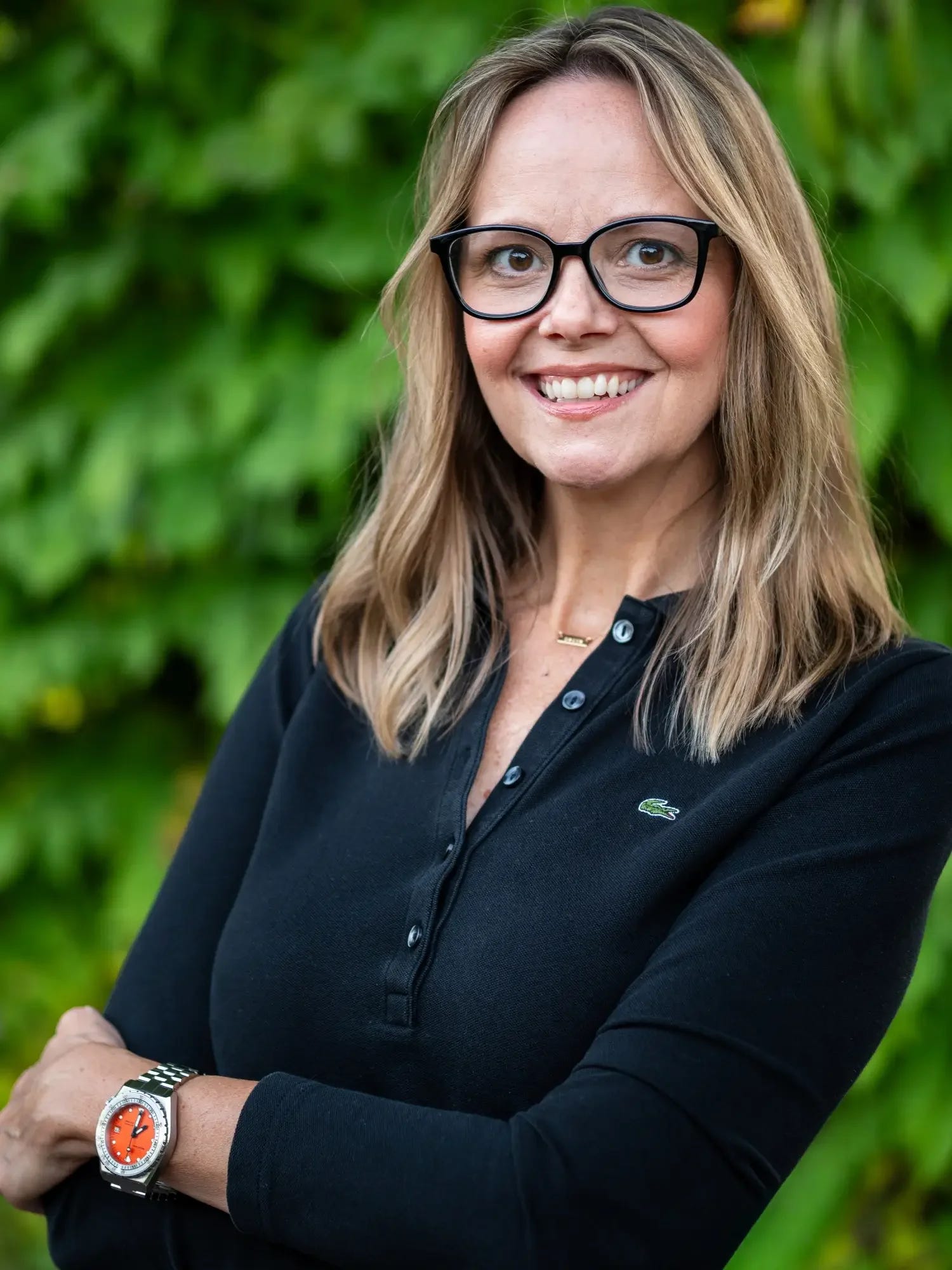
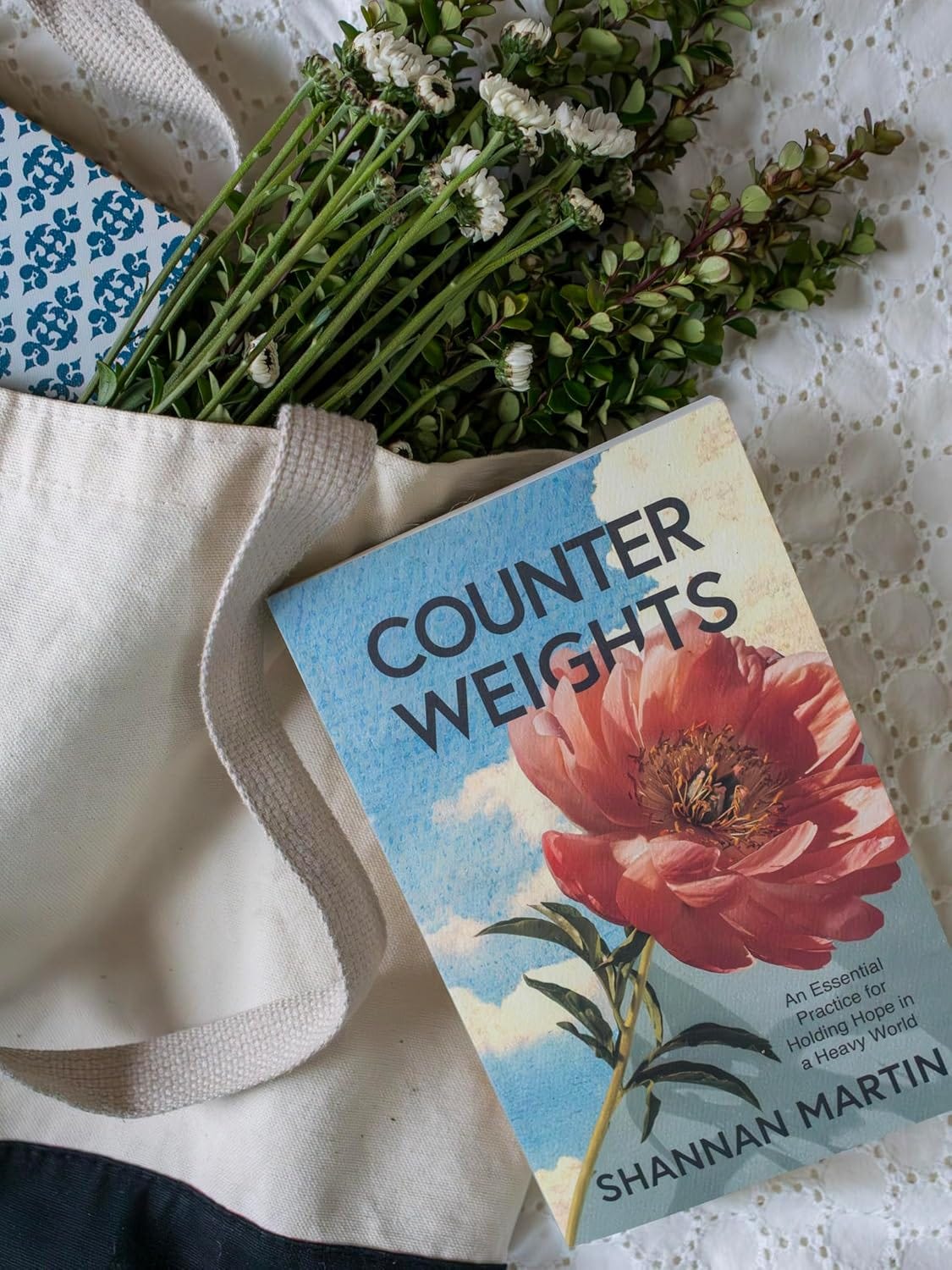
Shannan and I have known each other for years, both online and off. She’s the real deal, the love-your-neighbour kind of Christian, and a consistent voice of reality on social media. Her new book is called Counterweights: An Essential Practice for Holding Hope in a Heavy World.
After reading an advanced copy a few weeks ago, I knew that I wanted to share this one with you. It’s about how to carry all the heavy things of our days. Basically, this one was made for such a time as this for folks like us. And for all of us who have felt like lonely in the weight of the world, this will be a kind friend to you.
So for this week’s Field Notes, I’m sharing our conversation about everything from what counterweights even are to how this practices differs from ye olde “gratitude lists" or “counting your blessings.” We chat about justice, grief and lament, what an abundant life even MEANS right now, how we can stay open and tender-hearted, what it means to build community, our love for a chain grocery store, the joy of thrifting, telling honest stories about the church communities who broke our hearts, and so much more.
If you are looking for ways to carry everything that’s heavy right now, I hope you find some goodness that helps in that work here.
A Conversation with Shannan Martin
Sarah: For readers who are just meeting this book for the first time, how would you describe the idea of “counterweights” in your own life? What first made you realize you needed them?
Shannan: Life has never been easy, but it started to feel like the heaviness was compounding. Every hour, there was a new terror to contend with. The anxiety in the air thickened into a fog. Everyone was mad at each other and people were growing meaner by the day. And that was on top of the regular demands of being human. It started to feel like too much. I knew I needed to find a way to redistribute the weight so I could carry both the challenges and the goodness.
A counterweight is any little thing that lifts us up and tilts the scale toward goodness. Most of us are looking for ways to survive, but the counterweights practice reminds us that it’s about more than that. There’s so much we can’t control, but there are tiny pockets in our days where we still have a say. There are moments where we can choose delight, carve out rest, and pursue beauty. Those counterweights keep us breathing through the chaos. We only get to do this once. We owe it to ourselves and each other to be as whole and healthy as possible. We can’t create a better world if we don’t remember why, in spite of it all, there’s still so much to love about life.
Sarah: You start us off with the no-nonsense very literal advice from your blue-collar father about heavy things: “carrying something heavy becomes more efficient, more doable, if we carry something equally heavy in the other hand.” Right now, everything feels incredibly heavy especially if you’re paying attention to the world.
You use that notion of counterweights to frame the entire book: “If our grand plan is to find a way to keep going, the answer is to double up on the weight. Redistribute the weight. Get back to work.” As a prairie kid, this? I understand. Counterweights is very honest about the weight of the world now and yet you aren’t glib about “counting blessings” either. How is Counterweights different from a lot of the “count your blessings” or “be content and grateful” books that are often - let’s be honest - geared towards women?
Shannan: Yeah, I’ve done the gratitude lists a time or two. There’s nothing wrong with them, but they don’t tell the whole story. Personally, I find gratitude to be meatier when I hold it up against the struggles and sorrows. It’s grounding to take stock of it all, the good and the bad. Doing this orients me to the white-hot center of my reality. If I can love my life there, I can carry on in hope.
My dad and his two heavy buckets gave me a mental image that really stuck with me. We can picture our lives as a scale. On one side of the scale are all of the heavy hardships we didn’t ask for and can’t control. But there’s another side to that scale. We can choose to load it up with heavy goodness. When we do, it lifts us up and pulls us back to center, so we have momentum to keep going.
We can only counter what we’re willing to weigh. Giving both buckets our sacred attention is a simple but profound way to show up for ourselves.
“Abundance isn’t experienced merely by counting our blessings but by countering our weights.” - Shannan Martin
Sarah: In my early years, I was discipled in the prosperity gospel/Word of Faith movements who absolutely loved John 10:10 (that “abundant life” promise). So maybe that’s why I immediately noticed your opening take on that verse. You write “The abundance is not just the good stuff. We get it all. Every drop, every dreg - the good, the terrible, the “Who even knows?” That’s the deal.” This is such a reframing of the promised abundant life. How has your understanding of an abundant life shifted?
Shannan: Hey, me too! Many of my most formative years were spent in charismatic, prosperity gospel spaces. It never really “took” for me. I always felt skeptical and even uncomfortable, which, in turn, made me doubt myself. Even as a child, though I didn’t have the words yet (not to mention the voice,) I couldn’t make sense of an abundant life that promised only “good” and bountiful things – health, wealth, and comfort – when reality proved much more complicated. My family of origin struggled financially for many years, but we were told to claim the promise of wealth. I watched people who professed perfect health die of cancer they refused to acknowledge out loud. It seemed like a hyper-spiritualized form of Christian “voodoo,” which was, naturally, a word too dangerous to mention.
When I was sixteen with a driver’s license, I made my escape to a less dramatic denomination. It wasn’t until decades later, after our family moved into the neighborhood and found community with incarcerated people, that I began to understand “abundance” differently. I now had proximity with people who struggled deeply but honestly. That honesty that shifted something in me. I had to learn, for the first time, that my faith and my relationship with Jesus is not separated from reality. There was no need for magical thinking and no space for keeping secrets from God. Our friends taught me the freedom of telling the truth about grief, disappointment, pain, doubt, and failure. Only then did I begin to experience the nearness of Jesus, my companion, through it all. Only then did I understand the richness of a community committed to not playing games. True abundance means we get it all. Our job is to figure out how to carry it, preferably together.
Sarah: Many of us feel overwhelmed by the heaviness of the world right now. How have you learned to stay tender and open-hearted without becoming exhausted or numb?
Shannan: Unfortunately, I have a very “all or nothing” mindset. When difficult things are happening, I believe they’ll stay that way forever. I have to fight my way out of that. At times, my hardest work is against becoming cynical. When I feel that creeping in, I know I need some resets. And I know no one can do it but me. I was taught that my heart was wicked and my body was selfish and sinful, but I know better now. I’m learning how to listen to my body to understand what I need. I often ask myself – sometimes out loud – what are my counterweights? They are always happening, hiding in plain sight around us, waiting to be noticed, waiting to help. I might need a quick nap. Hydration. Silence. A walk. I might need to go stick my face in a flower or stare up at the sky. I might need to sit around a table with trusted friends. I might just need something to look forward to. No one can love my life for me. Gathering up counterweights throughout my days keeps me in the rhythm of appreciation for the small, accessible things that make life so dang juicy and delicious.
Sarah: Some of my favourite passages in the book are about your community - the soup kitchen where you work, the friends on your street, the neighbours we encounter. You are very embedded in your place. Why do you think belonging to a particular place and people is such an important spiritual practice right now?
Shannan: Our family moved to this community 14 years ago. I didn’t know a single person in this city. I had a language barrier with most of my neighbors. It was all very new and unfamiliar. And exciting! Now, this place is vitally home.
I’ve learned two important things. 1) Community has to be built. It doesn’t just happen. It takes time and sweat and awkwardness, and it is always worth it. 2) It’s not about “finding your people,” but rather, “recognizing your people.” Many of my most treasured friendships don’t make sense on paper. I’ve become a big believer in looking around at who else is within reach and building from there. At a time when things feel so fraught and divided and also so AI-generated, there’s nothing like gathering with the ones who know the truest version of you. I think we all want to be known. It just requires someone to reach out first.
“Justice and beauty intersected in the neighbourhood;
I wanted to spend my life in its bull’s-eye.” - Shannan Martin
Sarah: You’ve written openly about justice, belonging, and community. How does the idea of “counterweights” shape the way Christians engage with social issues, grief, and collective trauma?
Shannan: One of my favorite Bible verses is Jeremiah 29:7, “Work for the peace and prosperity of your city. Pray to the Lord for it, because its welfare determines your welfare.” (paraphrase) It is a whole sermon. I love that it states “work” first, and then “pray.” It’s like God knew we were going to be looking for short-cuts or reasons to not dive into the mess for the sake of each other. The order here seems meaningful. It doesn’t allow us to get stuck or sidetracked by simply praying about injustice from a safe distance. This verse offers a Biblical receipt that humanity is fundamentally interconnected. If one of us is not safe and well, the whole lot of us is not safe and well.
A thesis for this book (and my life) is that no one should have to die to experience the kingdom of God. As Christians, our collective task is to create a better, safer, more beautiful world for everyone, right now. I write throughout the book about the idea that if the people with the least amount of power are cared for, everyone is cared for. But! We cannot do this healing, nurturing, co-creating work if we exist in a doom spiral. Dreaming and creating requires hope. We have to be able to get out of bed. We have to stay as whole and healthy as possible. We have to remember what we love about our messy lives and this injured world. Counterweights helps us do that.

Sarah: I love your unabashed love for things that aren’t cool whether it’s Kroger’s (listen, I love a chain grocery store) or thrifting or mugs or even very ordinary not-photo-worthy meals. As someone who can be a pretty basic girl, I loved the acknowledgement of these basic aspects of our lives that aren’t always Instagram-worthy. Where are you experiencing a counterweight right now that would fall into that basic/ordinary/uncelebrated category?
Shannan: This is my fourth book, but my first book tour. There are so many details involved in putting something like this together, but the one most likely to make me panic is, what am I going to wear?? Amid the hustle and planning, I’ve found time to hit up the local consignment store and thrift stores and pulled together some entirely secondhand looks. Even the elusive shoe gods smiled on this endeavor! Thrifting is an evergreen counterweight for me, as you’ll see in the book. For me, there’s something really special about the communal aspect of shopping secondhand. Beauty is often found in humble places. The world is always providing what we need to carry on.
Sarah: There’s a strong thread of honesty in this book about grief and lament. Was there anything difficult or vulnerable for you to write about in this project? How did you decide what or even how to write about what happened with your church in particular?
Shannan: When I set out to write Counterweights, I wanted to be as honest as possible about both the weights and counterweights I was experiencing. Some of them are shared experiences and some are deeply personal. The fallout with our former church was catastrophic for my family. There was no way I could write honestly about my life without including that particular grief.
I didn’t feel compelled to go too far into the weeds of the story, in part because part of the healing process has meant literally moving forward, away from all of the details that had us bogged down for so long. I also know, sadly, the story of feeling hurt, betrayed, or even being harmed by a church is widespread. Too many of us relate, and I wanted to validate that. It has been eye-opening to experience firsthand the ways powerful institutions seek to silence those who seek justice and accountability. All the while, counterweights have emerged that have restored our faith, perhaps not in institutions, but in the gathering of ordinary saints and the journey toward the way of Jesus.
Sarah: If readers finish Counterweights with only one new posture toward God, themselves, and the world, what do you most hope it will be?
Shannan: Every Sunday at Holy Alliance (our weekly gathering with the men and women who are incarcerated at the work release facility,) my jail chaplain husband says, “What is God?” The crowd echoes back, “Love!”
“And what else is God?”
“Love!”
“And what else?”
“Love!”
I think he says it as much for himself as he does for anyone. If we could really settle into the unwavering, limitless, extravagant, singular love of God, it would change everything. It’s the ultimate counterweight.
My thanks to Shannan for writing her lovely book and for this conversation. You can find Shannan online:
More information about Counterweights - out today!
Shannan’s website for more about her, her work, and all the places to connect
The Soup is her newsletter here on Substacak
And make sure you follow her on Instagram.
You’re all a counterweight for me,
S.
My Books | Field Notes | Instagram | Facebook | SarahBessey.com
Keep Not Quitting: Sometimes the greatest act of faith we have in our arsenal is our stubbornness
The Prayer You Wrote For Each Other: We have all offered something to this prayer, even if it was simply our willingness to be present to it
An Invitation: Collaborative Prayer Circle: You don’t need to pretend you aren’t angry, that you aren’t cynical or afraid, that you aren’t feeling a bit hopeless or uncomfortable or envious or tired.
“I don’t want an easy faith, I want a brave faith.”: Celebrating Rachel Held Evans’ “Braving the Truth” + The Superlatives
A Simple Lent for Everyone Who Doesn’t Really Have Much Left in the Tank Right Now: A 40-day guide for those who want to observe Lent but honestly feel like they might cry if they have to add one more thing to the To-Do list
I loved our conversation, Sarah. Thank you - always - for your generous hospitality. I'm excited to build a better world with you. 🩷
I’m struck by the verse in Jeremiah that paraphrased says work first, then pray. I have also heard it said that if you want to do good, look for the work God is already doing and join him.